Posts
My Andryusha Will Never Come Back
February 18, 2026
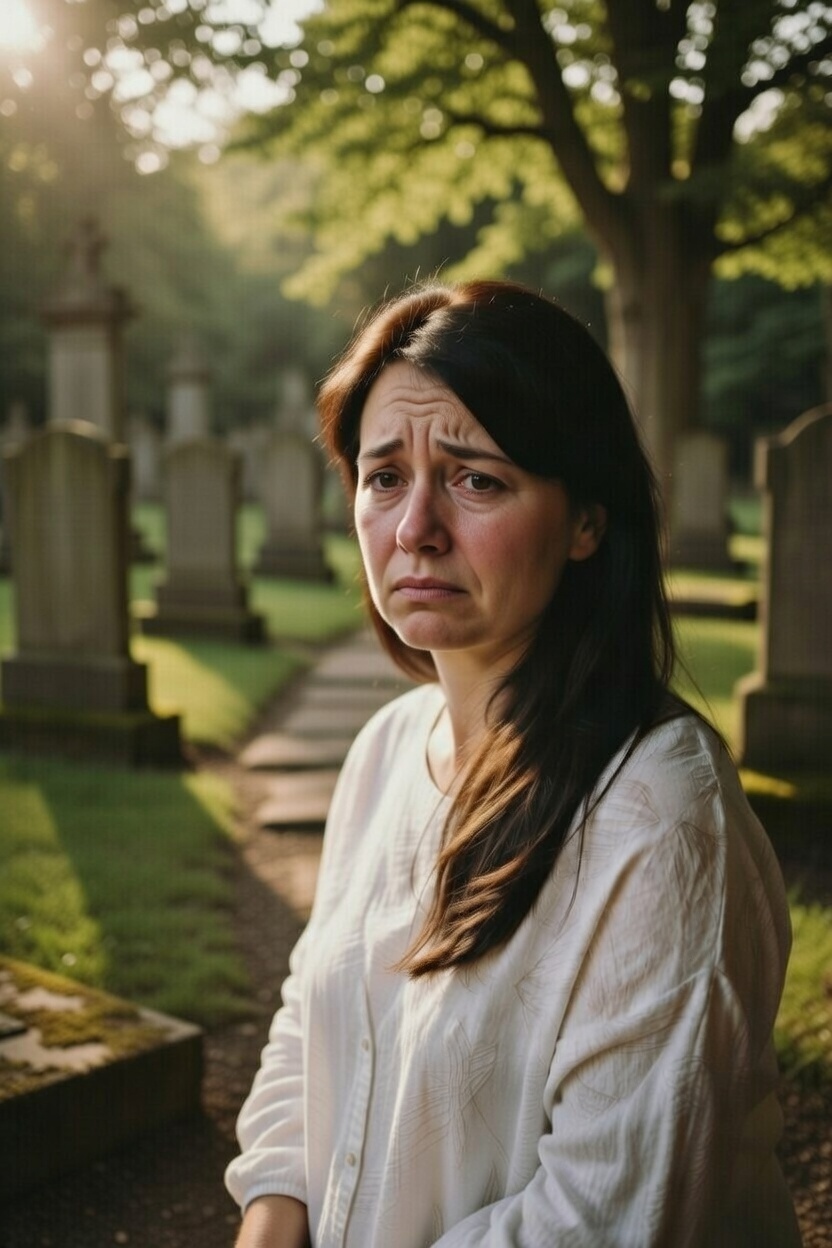
My name is Victoria Tolstaya, I am 45 years old, and I have lived my entire life in Novosibirsk. I worked as a nurse in the neurology department, taking care of strangers so they could get back on their feet. At home, I raised two sons. The older one is now in the army reserve; the younger one, Andrey — my Andryusha — was a professional soldier.When he left for the front in March 2022, I packed every parcel with love: potato dumplings, Alyonka chocolate that he had loved since childhood, and long letters. I wrote to him about how the lilacs bloomed in Novosibirsk, how the birds returned to the Ob River in spring, how everything turns green again. “Hold on, son, and write when you can,” I ended every letter.It came in October 2023. A short notice: he fell during the assault on Avdiivka. No details, no explanation. They just brought the urn with his ashes by train across the whole of Siberia. Since then I have worn his military dog tag around my neck. Every week I go to Zaeltsovsky Cemetery, place fresh pine cones on his grave, and talk to him as if he were sitting next to me on the bench. I tell him about the weather, about the neighbors, about how people at the hospital still ask about him.And I keep asking myself the same question: Why?Why did my nineteen-year-old boy have to die? Why did thousands of other Russian sons have to die? War is pointless. It only takes lives. It takes our children, our boys who were supposed to live, love, have children of their own. Nothing good has come from it, and nothing good ever will. Only empty beds in apartments, black headscarves on mothers’ heads, and endless silence that no heroic story can ever fill.Now I work part-time at the hospital, cook soup just for myself, and look at his photograph in uniform hanging on the wall. In the apartment in the Oktyabrsky district there is the greatest silence in the world — the silence after a son who will never come home again.The war took Andryusha from us. And for what?For nothing.Just for nothing.
Why Are We Even Dying Here?
February 18, 2026
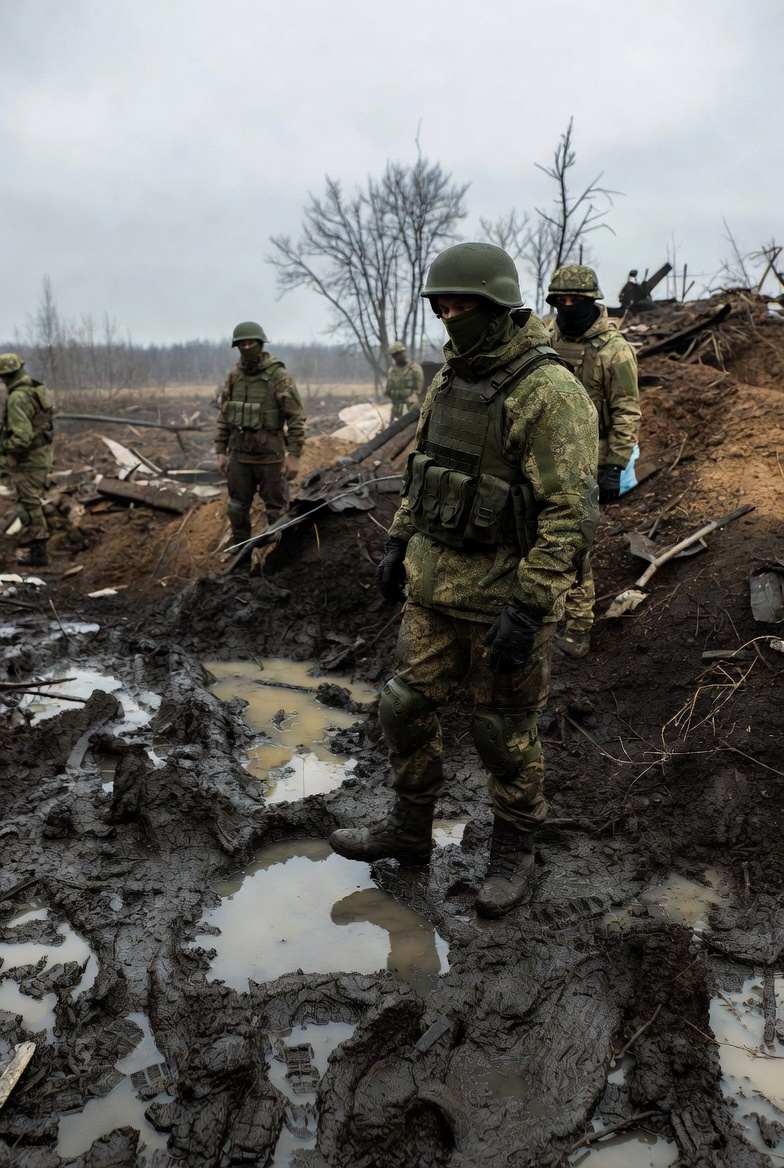
My name is Alexander Popov, I’m 46 years old and I come from Perm. Before the war I worked as a car mechanic in a small workshop on the edge of the city. I had a girlfriend, an old Lada that I fixed myself, and plans to open my own garage one day. Then February 2022 came and suddenly I was defending Russia from Nazis. I signed a contract. I believed it. Back then I really believed it.Now I don’t believe anything anymore.I’ve been sitting in a trench near Vuhledar for eight months and all I see is senselessness. The commanders tell us: Attack, the captured villages are strategic! Strategic for what? So that the next day a Ukrainian drone can tear us to pieces? They once sent us on a reconnaissance in force — thirty guys, no support, no artillery, just “go forward. Seven came back out of thirty. The rest are lying in the field and no one even came to pick them up. Losses are acceptable, the major said over the radio. Acceptable to whom? To him in his warm hut thirty kilometers back? I’ve seen things that won’t let me sleep. In one village we liberated, our guys looted houses, raped two women and then shot them so there would be no witnesses. The commander knew. He just waved it off: War is war. This isn’t war. This is atrocity. We came to protect Russian-speaking people and instead we killed their sons, burned their houses and stole their last chickens. How can this be beration? Every day boys who should be alive are dying. Dima from my unit had two small children. He died because someone higher up wanted to look good in the report. Serjozha from Buryatia — twenty years old, never saw the sea — is now lying in a mass grave because we ran out of ammunition and command said “hold the positions.” What position? A piece of mud that nobody cares about? This war makes no sense. NATO expanded because of us, Ukraine will hate us forever, Russia has lost tens of thousands of its best boys and the economy is in ruins. And we’re still dying here for denazification, which no one can even explain properly. Denazification? Have I seen Nazis? All I’ve seen are ordinary people who just wanted to live in their own country.If I ever make it back (if I make it back), I’ll tell my future children the truth: War is not heroism. War is stupidity, greed and crime. It’s a machine that devours young boys and returns only coffins and widows.I don’t want to be a hero. I want to be alive. I want to go home.Alexander Popov somewhere near Vuhledar, February 2026.
Silence after Artyom
February 18, 2026
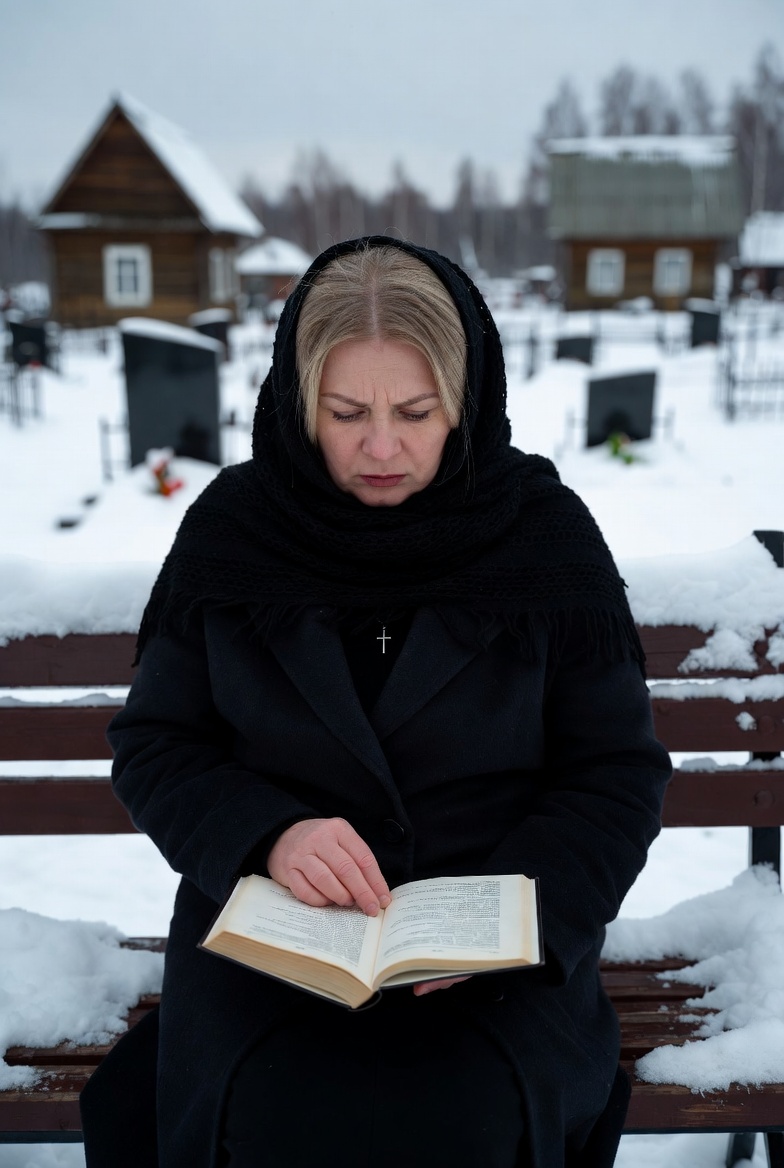
My son Artem died in the summer of 2024 near Volchansk. He was twenty-one. My name is Polina Lukyansheva, I’m 41 years old and I teach Russian and literature at Gymnasium No. 6 here in Tomsk. Artem was my only son. When he was called up for that “special operation” in 2023, he was still such a boy – he was smiling in all directions, he loved fantasy books and asked me if I could send him something to read when the trenches were boring. I packed his parcels every month. I put Pushkin, Yesenin, sometimes some modern book that he liked. Knitted gloves from a neighbor, chocolate, cookies. And letters – long, handwritten. I wrote to him about ordinary things: how the first snow fell on the Tomo River, how birds return to their old nests in spring, how pupils in class argued about “War and Peace”. “Hold on, son. Read when there is a moment of peace. And write when you can.” It came in July. A short military announcement, no details. The body was brought by train across Siberia in a zinc coffin. We buried him in a small cemetery in the Kirovsky District. Since then, I have been wearing his little silver cross around my neck, the one he had as a little boy. I go there every week. I sit on a bench, place my hand on that cold stone, and read poems to him in a whisper. The same ones I taught in class and sent to him in the trenches. Now, after school, I go home to a small apartment in the historic part of the city. I make myself some tea, sit by the window, and look at the old wooden houses. In the classroom where he once sat, his ninth-grade school photo hangs on the bulletin board—he is smiling, hair a little messy. When silence falls in the classroom, I feel it most of all. The greatest silence in the world is in the room where his voice once sounded and where now only that photo and an empty bed remain. Sometimes I tell myself that I should stop reading those poems aloud. But I can’t. It’s the only way to still talk to him. Under that Siberian sky, where he will never hear my voice again.
My Borscht Will Never Taste the Same Again
February 11, 2026
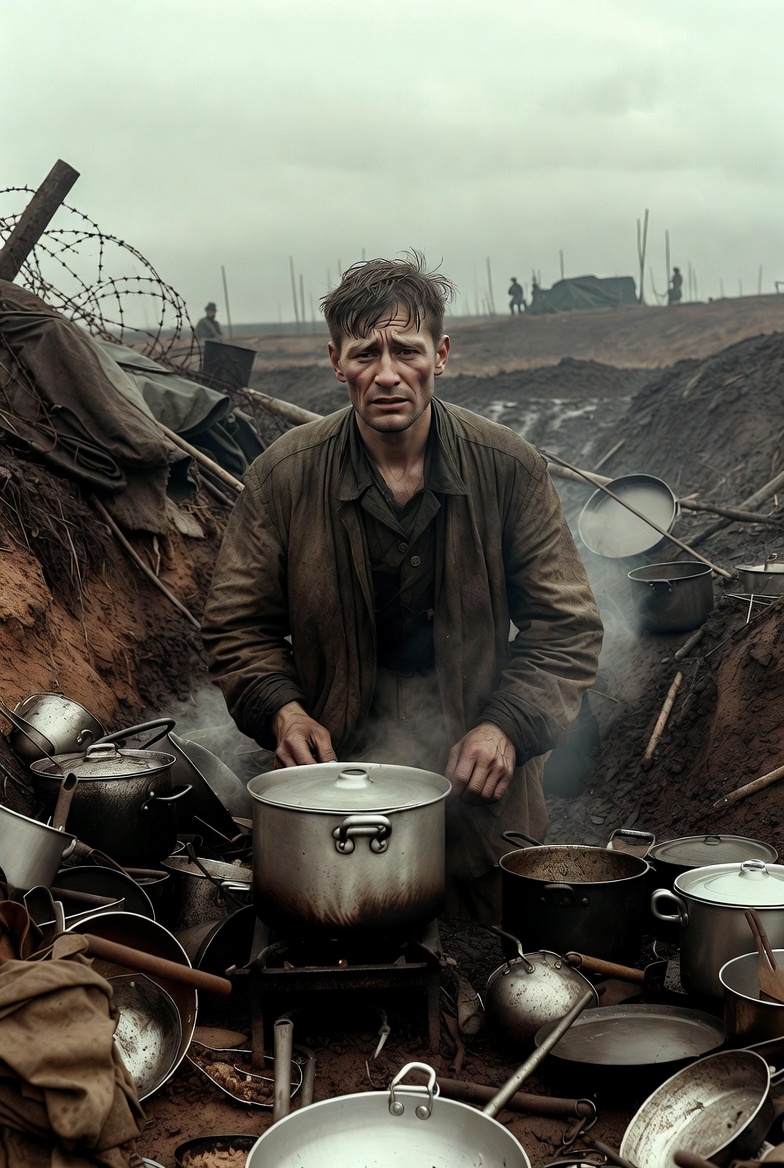
My name is Nikolai Kozlov, I’m 38 years old and I come from Omsk. My whole life I’ve been cooking — first in a factory canteen, then in a small restaurant on Lenin Street. Borscht, pelmeni, plov, cutlets — that was my language. People ate at my place, smiled, and went on with their day. I had Svetlana and three children: Nastya (12), Denka (9), and little Verunka (4). Verunka always “helped” me taste the dough for dumplings — a tiny finger into the bowl and then she laughed that it was salty. Those were my best moments.Then the war came. I signed a contract. Not because I wanted to fight. Because they said: “If you don’t go, you’ll lose your job, your apartment, everything.” And I had a family. I thought it would be for half a year, maximum one year. That I’d come back, cook a big pot of borscht and we’d all sit at the table again.Now I’ve been in the rear for almost two years — cooking for the company. Every day I chop onions, potatoes, meat. But the onions burn my eyes differently now. Every day I see boys who go to the positions and never come back. I see a twenty-year-old kid from Irkutsk eating my soup and saying: “Grandpa Kolya, this tastes like home.” And then I hear that a drone got him in the evening. He’ll never go home.What hurts the most is when a letter or video call comes from Svetlana. Verunka asks: “When is Daddy coming to make pirozhki?” Nastya almost doesn’t cry anymore, she just stays silent. Denka sends drawings — tanks, soldiers, but mostly Daddy with a big pot. And here I am cooking for strangers’ boys and thinking that my own children are growing up without a father.This war is pointless. It takes fathers from children. It takes sons from mothers. It takes lives from people who never hurt anyone. We’re here “defending Russia,” but Russia now is mostly empty tables, widows, and children who are afraid of the dark. What have we gained? Territory? Yes, a few kilometers of mud. And thousands of families like mine paid for it.I don’t want victory anymore. I want to go home. I want to open the door, hug Verunka who will smear flour on my nose, and cook borscht for my family. Not for the company. For the ones I love the most Because no “great geopolitics” is worth a single tearful look from my daughter when she asks: “Daddy, why aren’t you home yet?”And I have no answer to that question. Just silence and the smell of a field kitchen.Nikolai Kozlov somewhere in the rear, February 2026
Notes of Dmitry Morozov
February 11, 2026
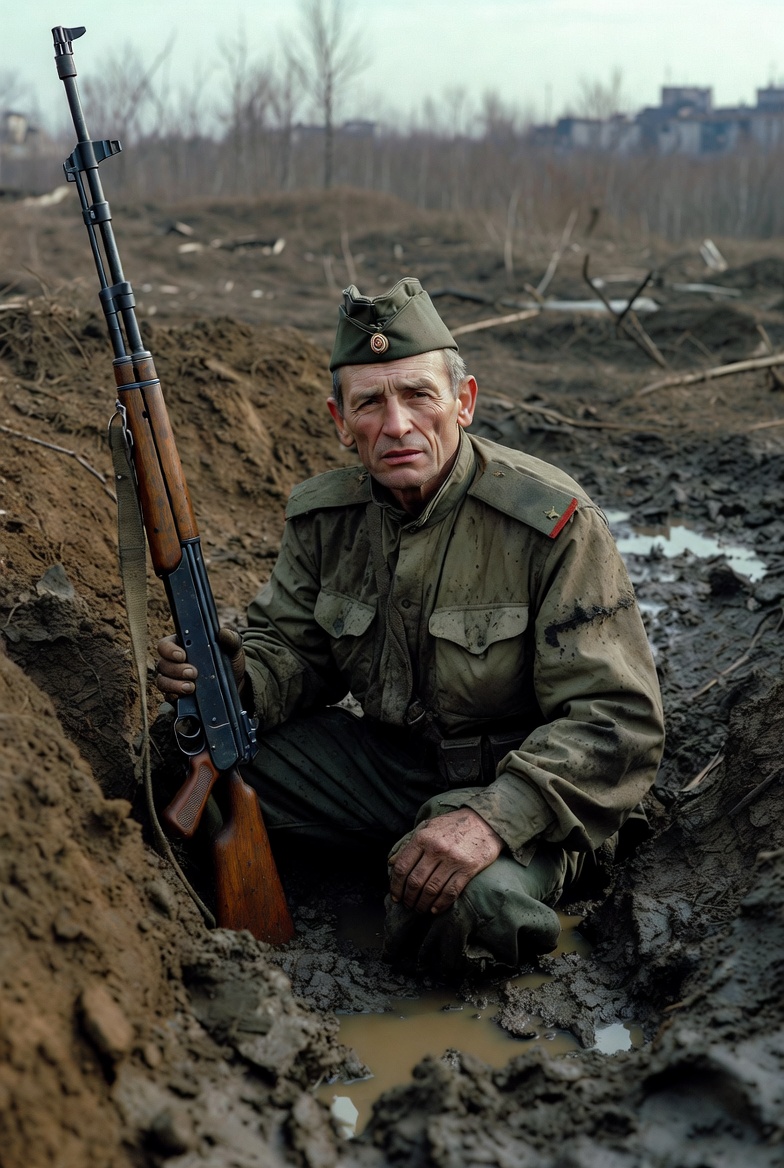
Every evening I sit in the trench and count. I am 56 years old. I used to teach children that war is evil, that it never solves anything. Now I am in uniform and I teach them… well, actually nothing anymore, because most of my students are here too or in bags. And yet I have to believe that it makes sense. Because if I stop believing, I am a ’traitor.’ And whoever is a traitor is sent to the front line without a bulletproof vest. So to survive, I have to believe in nonsense. And whoever believes in nonsense is not normal. But a normal person wouldn’t survive here. Catch-22 in full glory. Sometimes I tell myself: if I were still a teacher, I would give the students a test: ‘Explain why the Russian army in 2025 is fighting with the same tactics as in 1943, only with worse logistics.’ he correct answer would be: ‘Because bureaucracy triumphs over common sense.’ The wrong answer: ‘Because we are heroes.’ For the wrong answer, today a person would be in prison. So I sit here, a 56-year-old teacher who never sought fame, waiting for the next order. And I know one thing for sure: when this war ends (and it will end, because all nonsense eventually ends), I will write a book. It will be called Catch-22 – the Russian version.
The One Who No Longer Wants to Be a Hero
February 11, 2026
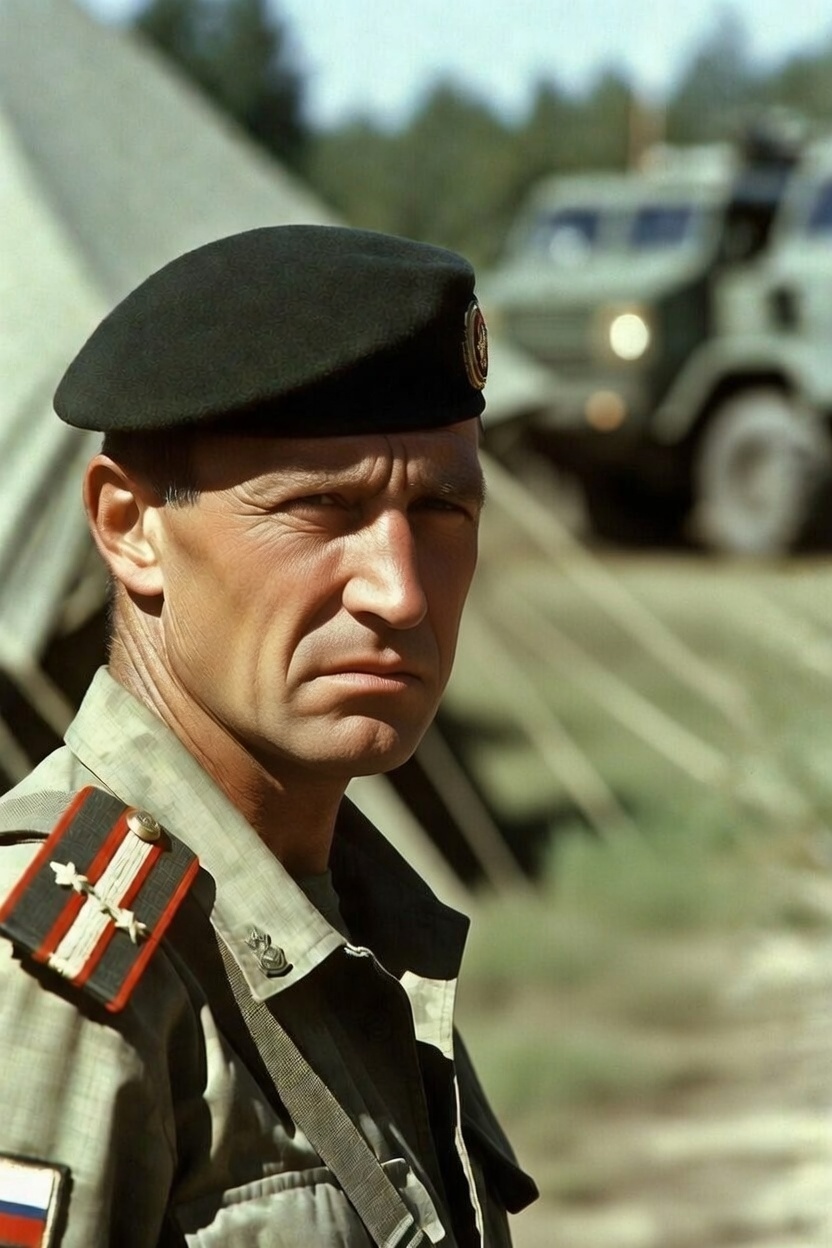
My name is Ivan Novikov, I’m 51 years old and I come from Khabarovsk. My whole life I’ve been fixing cars — UAZs, KamAZs, then those Japanese used imports that came through the port. I lived alone in a panel block on the edge of town, garage on the ground floor, radio, beer with the guys after work. No wife, no kids. It was enough for me.I had a younger brother, Sasha. Ten years younger. He was full of life — laughed out loud, drank with us at the pub by the River, played old songs on the guitar and said: “Bro, when I get some money, we’ll buy an old Ural together and drive to Baikal.” Then the war came. Sasha went voluntarily — said he “had to defend Russia.” I tried to talk him out of it. I told him: “Sasha, this isn’t our war. It’s someone else’s war.” He didn’t listen.He was killed last summer near Robotyne. Just a notification arrived, and a coffin. We buried him in the cemetery outside town, next to Dad. Since then I wear his watch on my wrist. Every day I wind it, as if he might still show up.Now it’s my turn. I’ve been on the front for over a year, in a repair company. I fix Urals, KamAZs, generators — same mess as back home, only instead of oil there’s blood and mud. I hate this war. I hate it more every day. I hate how the commanders tell us “hold on, guys, victory is close” when I see boys dying who should be alive. I hate how we’re turned into killers and victims at the same time. I hate that I’m here because of something I don’t understand and never will.I want to go home.I want to sit in our old pub by the River, drink beer with the guys from the workshop, listen to someone play “Kalinka” or “Moscow Nights” on the guitar, laugh at stupid jokes and pretend life is still the same. I want someone to pour me another half-liter and say: “Come on, Vanya, let’s leave it for today.” I want no one to call me “brother,” because that word now hurts like a knife.But Sasha won’t come back. And I’m still here. Fixing another engine that a drone will blow up in a week anyway. And then another. And another.This war took my brother from me. It took my home. It took my taste for beer. And I don’t want to be part of anything big anymore. I just want to be home. Sitting in the pub. And staying silent about all of this.Ivan Novikov somewhere in Donbas, February 2026
Trenches Against NATO: Why We Are Dying Here for Nothing
February 11, 2026
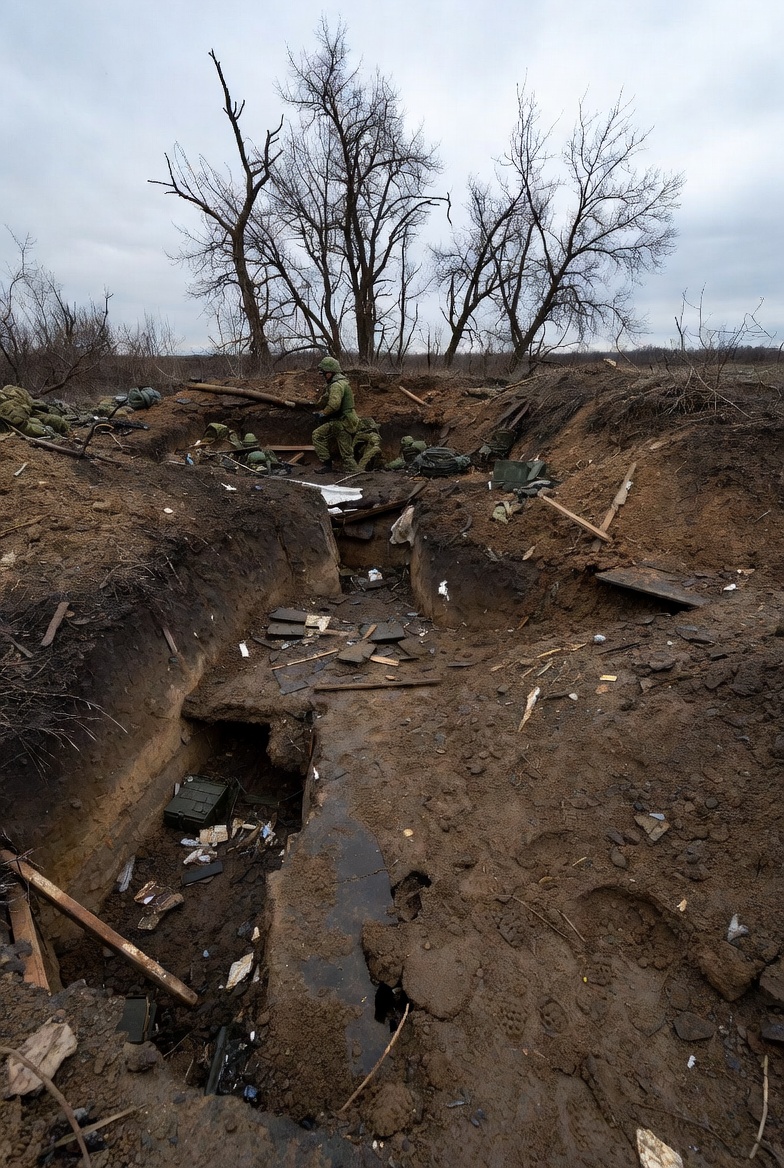
My name is Maxim Donchenko, I am 29 years old and I come from Ufa. Two years ago I was an ordinary guy — a truck driver, father of a little daughter, a husband who dreamed of one day buying his own garage and repairing cars. Now I am “deployed against NATO.” That’s what they tell us at briefings. I sit in a trench somewhere near Pokrovsk and look at the mud, the torn trees, and the comrades who are no longer here.When they sent us here, they said: “We are defending Russia from NATO, which is pushing right up to our borders.” I believed it. For the first few months I believed it. Then I saw how the guys from my company died. Not in battle with some “Western army,” but in the mud, under drones that flew from Ukrainian positions. I saw Serjozha from Voronezh die — he had two little girls. I saw Vova from Buryatia die — he was silent, just stared at the sky and said: “Mom…” And I stood there thinking: Who exactly are we fighting against? Against NATO? Where is this NATO? All I see are Ukrainian boys defending their land, the same way we would defend ours if someone invaded us.Every day the same question echoes in my head: What have we gained here? Territory? Yes, a few villages that look like after the apocalypse. And how many Russian boys paid for it? Thousands. Tens of thousands. Their mothers now wear black headscarves, their children grow up without fathers, their wives are left alone. And why? To “stop NATO”? NATO only expanded because of us. Finland, Sweden — all because of this war. We gave them the excuse.I sit here at night, smoking my last cigarette and thinking: If instead of all this we had sat down at one table, if we had reached an agreement, how many lives would we have saved? My life. Serjozha’s life. Vova’s life. The lives of hundreds of thousands of Russian and Ukrainian boys who were supposed to live, love, build homes, raise children.This war is not about heroism. It is not about defending the homeland. It is about pointless death. About how powerful people decide the lives of ordinary guys like me. And we die here for nothing. For empty slogans. For someone else’s ambitions.If I ever make it home (if I make it home), I will tell my daughter the truth: War is not glory. War is just stupidity that kills the sons of Russia. And we must never, ever repeat it.Maxim Donchenko somewhere on the Donetsk front, February 2026
My Sergei Will Never Open the Door Again
February 11, 2026
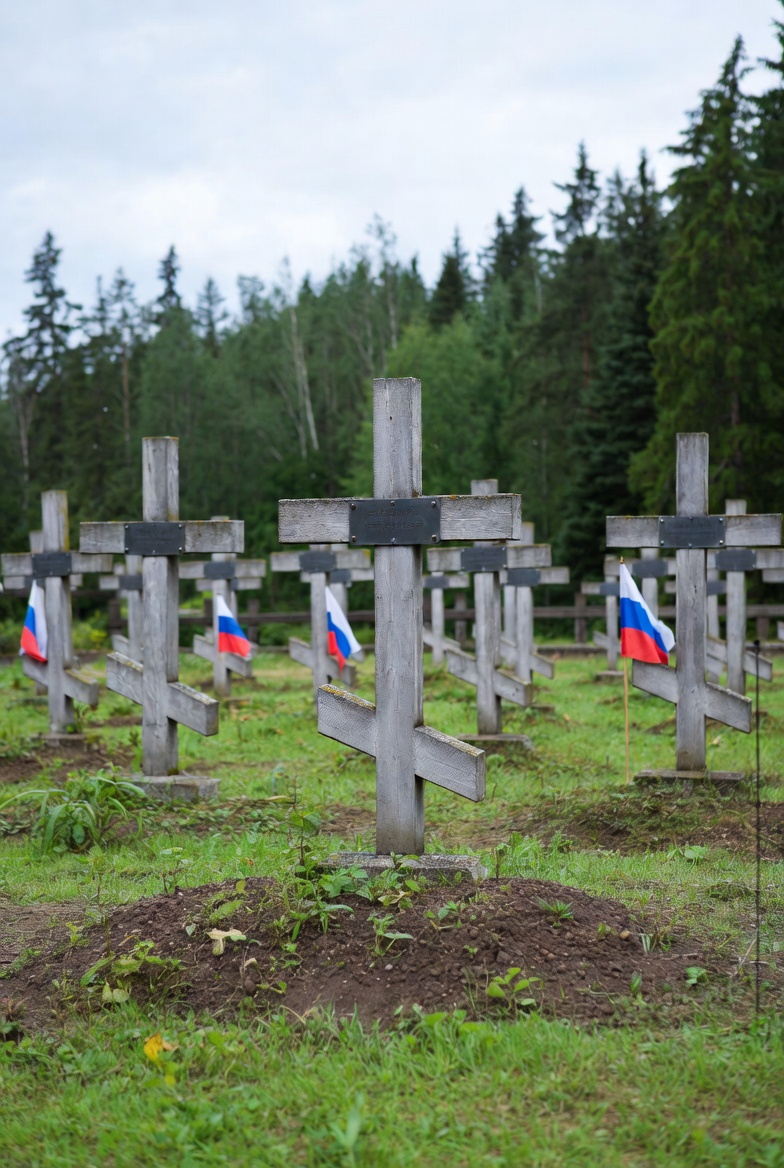
My name is Nadezhda Ulyeva. I am 61 years old and I have lived my entire life here in Moscow. I was an ordinary accountant — whole days in the office, papers, numbers, payrolls. The only thing that truly filled my life was my son Sergei. My only child. I raised him alone after my husband died in 2005. He was strong, a kind boy. He became a professional soldier — he said he wanted to protect the Motherland. I was afraid, but I looked at him proudly in his uniform.When he left for the “special military operation” in February 2022, I packed him parcels every month. Homemade meat pirozhki, which he loved the most, wool socks I knitted for him, chocolate, dried fruit. And most importantly — letters. Long, handwritten ones. I wrote to him about everyday things — how the chestnuts bloomed on Tverskoy Boulevard in Moscow, how the neighbor planted petunias on her balcony again, how I cooked borscht for him and kept it in the freezer for the day he would come back. Every letter ended the same way: “Just hold on, my son. And come back. Please, come back.”It came in April 2023. A short military notification. He fell in the spring during fighting in the east. No details. Just a date and a place. They brought the body in a zinc coffin. We buried him at Khovanskoye Cemetery. Since then I have worn a black headscarf. Every week I go there. I bring fresh flowers — tulips in spring, carnations in summer, chrysanthemums in autumn. I sit on the bench by his grave and talk to him out loud. I tell him about the weather, about how they talk about victory again on television, about how the neighbors asked if I had any news. As if he were listening. As if he were answering me.Now I live alone in a small two-room apartment in southern Moscow. I cook borscht — not for him anymore, but for the neighbors, so they have something warm. Sometimes I meet with other mothers — the ones who also lost their sons. We sit, we are silent, sometimes we cry, sometimes we just hold each other’s hands. None of us has words that could fix it.The greatest pain is not the grave, not the funeral, not even that notification. The greatest pain is the silence. The silence in the apartment where his laughter once rang, his footsteps as he slammed the door, his voice calling “Mom, I’m home!” Now the silence is so loud I hear it in my ears all the time. And in that silence I keep asking the same question over and over: Why? Why did my only son have to die? Why did thousands of other boys have to die? What did we gain from this? What kind of “victory” is worth it when sons don’t come home?I don’t want victory anymore. I just want to hear his voice. I want him to open the door and say: “Mom, I’m back.”But he won’t come back. And I will listen to this silence until the end of my days.Nadezhda Ulyeva Moscow, February 2026